Excellent
Summary
An engrossing television series with memorable characters and beautiful production values.
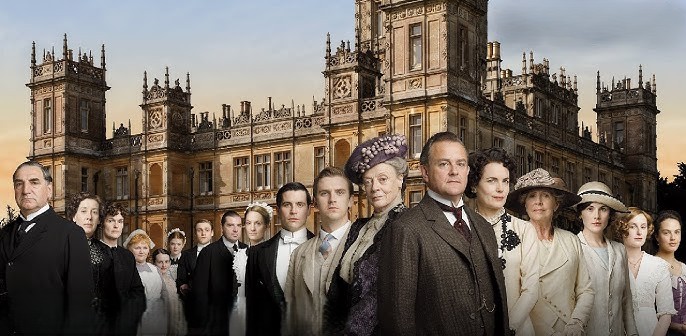
Plot: The exploits of Robert Crawley, the Earl of Grantham (Hugh Bonneville) and his family play out from April 1912 to January 1926.
Review: I don’t have much experience with British dramas. I have watched my fair share of English comedy shows, but the British drama? Rare. However, I have heard and read so many good things about Downton Abbey from many people that I decided to give it a shot. The fact that the series is so short certainly helps – the problem with most television shows I begin watching is that they either go on forever (and at some point, jump that infamous shark) or they are cancelled before they end properly.
Thankfully, Downton Abbey does none of those. While three films cover the characters’ exploits after the series ended, if you choose not to watch them, I don’t think you’ll be dissatisfied. The fact that there are three films made after the series speaks to the powerful narrative and memorable characters that Julian Fellowes creates with this show.
Let’s start with the stories. The plotting is just fantastic. There is never a dull moment in the Crawley household, and even though ninety-nine percent of the show is just talking, I found myself never bored. That’s not to say nothing exciting happens. Deaths, a fire, a knock-down, drag-out fight in a dressing room, someone vomiting blood at the dining room table – like I said, never a dull moment. Yet, while those exciting bits are memorable, I’m every bit as engrossed watching the constant shifting social positions and strategies that are the trademark of this series. Give me a room full of characters dressed in 1920s garb, and I’m just as interested as a clandestine dance in a swinging dance club.
The characters are really what make this show, and they are a true kaleidoscope. Some characters, like Carson, the butler, Isobel Grey, and Violet Crawley, experience little or very subtle character changes. Then, you have characters like Tom Branson or Thomas Barrow who experience noticeable character arcs, sometimes moving 180 degrees from where you first saw them. There is no right method, though, and a character not changing drastically over the series is not bad. In fact, it serves as an interesting juxtaposition to those characters who do undergo extreme change. The definitive statement I can make is that there is not a poorly written character in this series. Not one.
As for my favourite character, it probably is not a shock that it’s Violet Crawley, brought to life by the incomparable Maggie Smith. Almost every line of dialogue she gives is gold, and her conversations with Penelope Wilton’s Violet are the highlight of the show. Never have I seen characters so at odds, yet so believably warm to each other, nevertheless. Other than her, my favourites are Bates and Anna, the unshakeably likeable valet and lady’s maid, who experience the worst on-screen happenings of anyone in the show, and still soldier on in incredibly gentle and kind terms.
Okay, let’s get to the production values. What can I say? The sets are sumptuous and elaborate, the costumes ornate and beautiful, the music perfect; every frame in that series is incredible. I obviously wasn’t around in the time that this show takes place, but from what I’ve read, the attention to detail is second to none. If nothing else, Downton Abbey is a sight to behold, and everything looks 100% authentic to me.
Are there any negatives to this series? None that I can think of. If anyone found any fault with a character, I believe that it was intentionally written that way. No storyline went too far past my suspension of disbelief, no moment felt forced or tedious. This is a really, really damn good show, and it’s worthy of all the praise it has received. If you are not the sort of person interested in period British dramas, take it from someone who generally doesn’t watch them – don’t miss this one. It may just convert you.